How to Choose the Best Robotic Arm for Your Needs?
Choosing the right robotic arm requires careful consideration. The options can be overwhelming. Different projects and applications demand unique features and specifications. Understanding your specific needs is crucial.
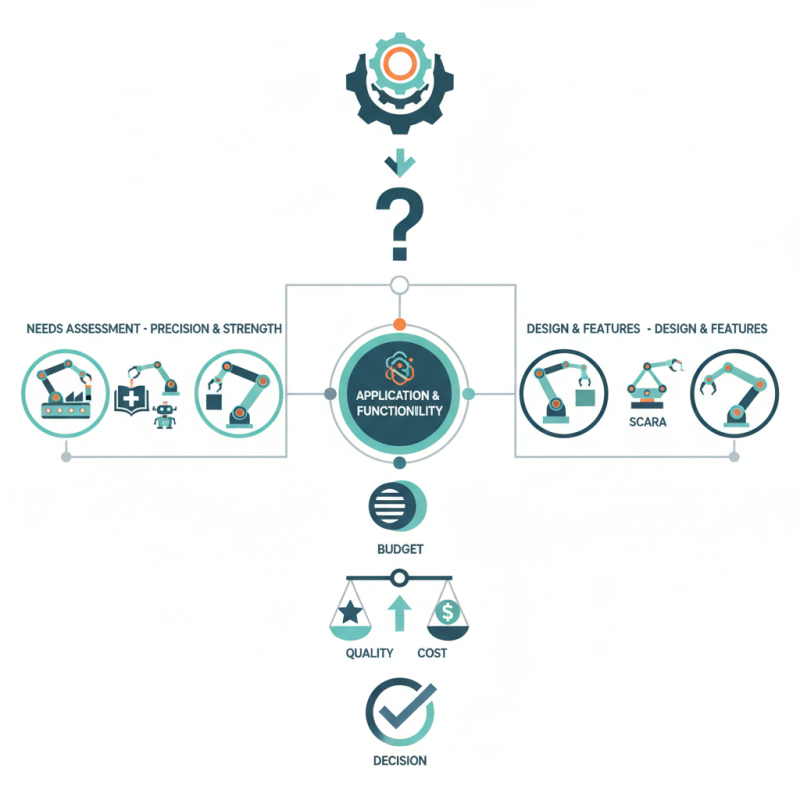
Robotic arms serve various industries, including manufacturing, healthcare, and education. They come in diverse designs and functionalities. However, not all robotic arms are created equal. Some may lack the precision or strength needed for complex tasks. It is essential to evaluate the intended use.
In addition, the budget plays a significant role in your decision. High-end robotic arms may offer advanced capabilities but may also exceed your budget. Balancing quality with cost is a common challenge. Reflecting on the key aspects can help refine your choice of a robotic arm. Knowledge and clarity will lead to the best decision for your needs.
Understanding Your Requirements for a Robotic Arm
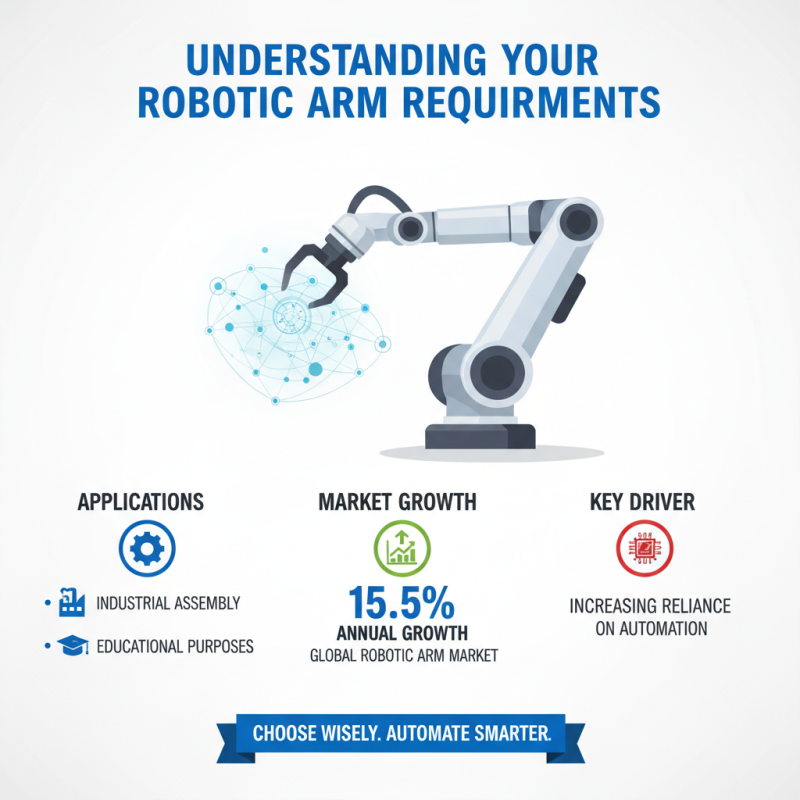
Choosing the right robotic arm involves understanding specific needs. The applications of robotic arms vary widely from industrial assembly to educational purposes. According to a recent industry report, the global robotic arm market is expected to grow by 15.5% annually. This growth highlights an increasing reliance on automation.
It's crucial to evaluate the payload capacity. For instance, light-duty arms handle weights under 5 kg, while heavy-duty options can manage over 100 kg. Understanding the weight and precision required for your tasks is key. A mismatched arm can lead to inefficiencies. Moreover, assess the workspace dimensions. An arm designed for a small area may not perform well in a larger setup.
Integration is another factor. Compatibility with existing systems impacts overall efficiency. Tools and software may differ significantly across models. Researching relevant documentation can provide insights. Keep in mind that not all robotic arms are user-friendly. Some models may require extensive training or programming knowledge. Errors in implementation could lead to costly downtime. Adjusting to this learning curve is essential for maximizing productivity.
Types of Robotic Arms and Their Applications
Robotic arms come in various forms, each tailored for specific tasks. The most common types include
articulated, SCARA, Cartesian, and delta robotic arms.
Articulated arms mimic a human arm’s movement, making them suitable for complex manufacturing processes.
According to industry reports, articulated arms accounted for 45% of the global market share in 2022.
SCARA arms excel in precision assembly tasks, often used in electronics and automotive industries. Their design allows for quick lateral motion, enhancing productivity. Delta robots are known for their speed and accuracy, largely utilized in packaging and food processing. They can handle multiple items simultaneously, increasing throughput.
Yet, choosing the right arm can be challenging. Factors such as payload, reach, and speed can significantly impact the arm's suitability. Many users may overlook integration capabilities with existing systems. Some reports indicate that 30% of companies experienced delays due to integration issues after selecting an inappropriate robotic arm. Understanding each type's strengths and limitations is crucial for optimal results in any application.
Key Specifications to Consider in a Robotic Arm
When selecting a robotic arm, certain specifications stand out. Pay attention to the payload capacity. This defines how much weight the arm can carry. For example, many industrial robotic arms can lift between 5 to 100 kg. A robotic arm's reach is another critical factor. It determines how far the arm can extend from its base. Standard ranges vary from 0.5 meters to over 3 meters. Understanding these capabilities is crucial for meeting your project requirements.
Another essential specification is precision. Many applications demand high accuracy. A well-equipped robotic arm can achieve repeatability within ±0.05 mm. This level of precision is crucial for tasks like assembly or soldering in electronics. Speed also plays a vital role. The cycle time impacts productivity. Most robotic arms operate between 0.5 to 5 seconds per cycle, depending on the complexity of the task.
Keep in mind the programming interface. An intuitive system eases the programming process. Many automated tasks require complex setups. Hence, some robotic systems offer advanced software solutions, making it easier to integrate into existing workflows. Evaluating these specifications helps ensure the robotic arm meets both current and future needs. Don't overlook these details; they may seem minor but can significantly impact performance.
Evaluating Cost vs. Performance in Robotic Arms
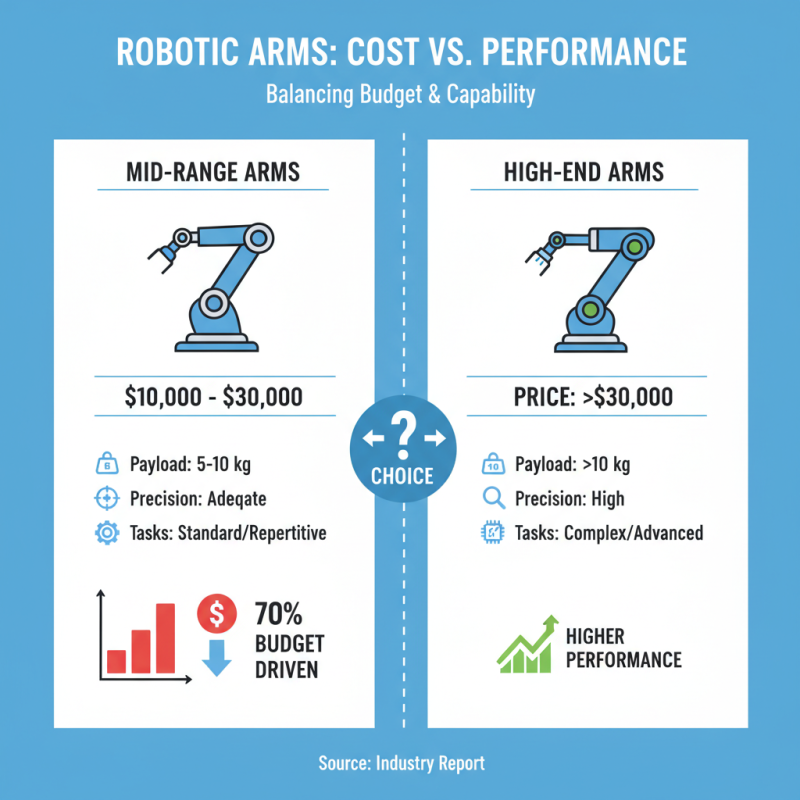
When choosing a robotic arm, balancing cost against performance is crucial. A recent industry report revealed that 70% of companies find budget constraints a significant factor in their purchasing decisions. For instance, mid-range robotic arms priced between $10,000 and $30,000 typically offer around 5-10 kg of payload capacity and adequate precision. While these models fit many applications, performance may lag behind higher-priced alternatives, which can handle more complex tasks efficiently.
Performance metrics such as speed, payload capacity, and accuracy can vary greatly. A robotic arm with a higher initial cost may reduce long-term operational costs through increased efficiency. For example, advanced models can execute tasks 30% faster, potentially leading to greater production throughput. Conversely, less costly models may require more frequent maintenance or lack the precision needed for intricate operations. Therefore, reviewing technical specifications alongside cost is essential.
Investing only based on initial prices can lead to regrets. Companies must evaluate the total cost of ownership, including potential downtimes due to performance issues. Often, lower-priced options seem attractive at first, but they can incur higher costs over time. Balancing these aspects requires a deep understanding of both current needs and future growth.
Researching and Comparing Different Brands and Models
When researching robotic arms, one must consider various factors, making informed comparisons essential. Various brands offer different features, prices, and capabilities. Understanding the core functionalities of each model helps narrow down choices. For instance, some models excel in precision tasks. Others are better suited for heavy lifting. It's critical to evaluate your specific needs before diving into specifications.
User reviews can also shed light on reliability. Feedback from existing users provides real-world insights. Look for common issues or praises. Some models may have software bugs that affect performance. Others might come with helpful customer support, enhancing usability. Watching video demonstrations can help visualize performance. These resources clarify how each model handles tasks.
Don’t overlook the importance of warranty and service options. Some companies offer extensive coverage, which adds peace of mind. If a robotic arm fails, quick service is vital to maintain productivity. Many users overlook this aspect during their research phase. Balancing features, price, and after-sale service is key. Each element contributes to making an informed choice.